NORTHERN NORWAY · TRAVEL GUIDES
Unique Norway
When, Where and How to See the Aurora?
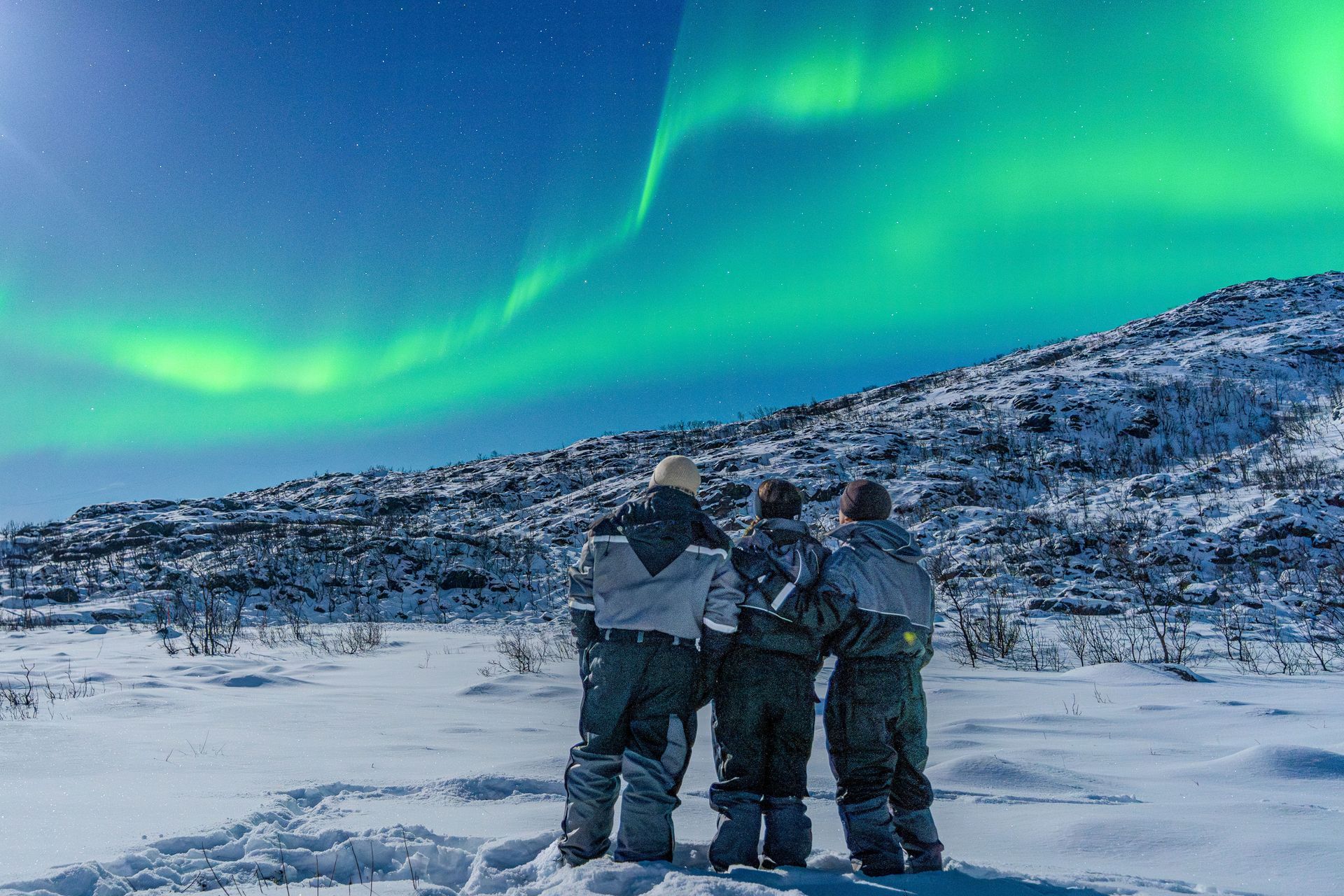
Tromsø sits right under the auroral oval at 69°N, which makes it one of the most reliable places on
earth to see the northern lights. But "reliable" doesn't mean guaranteed — the aurora rewards people
who pick the right season, chase clear skies, and give themselves a few nights to work with. This is our
local guide to doing exactly that.
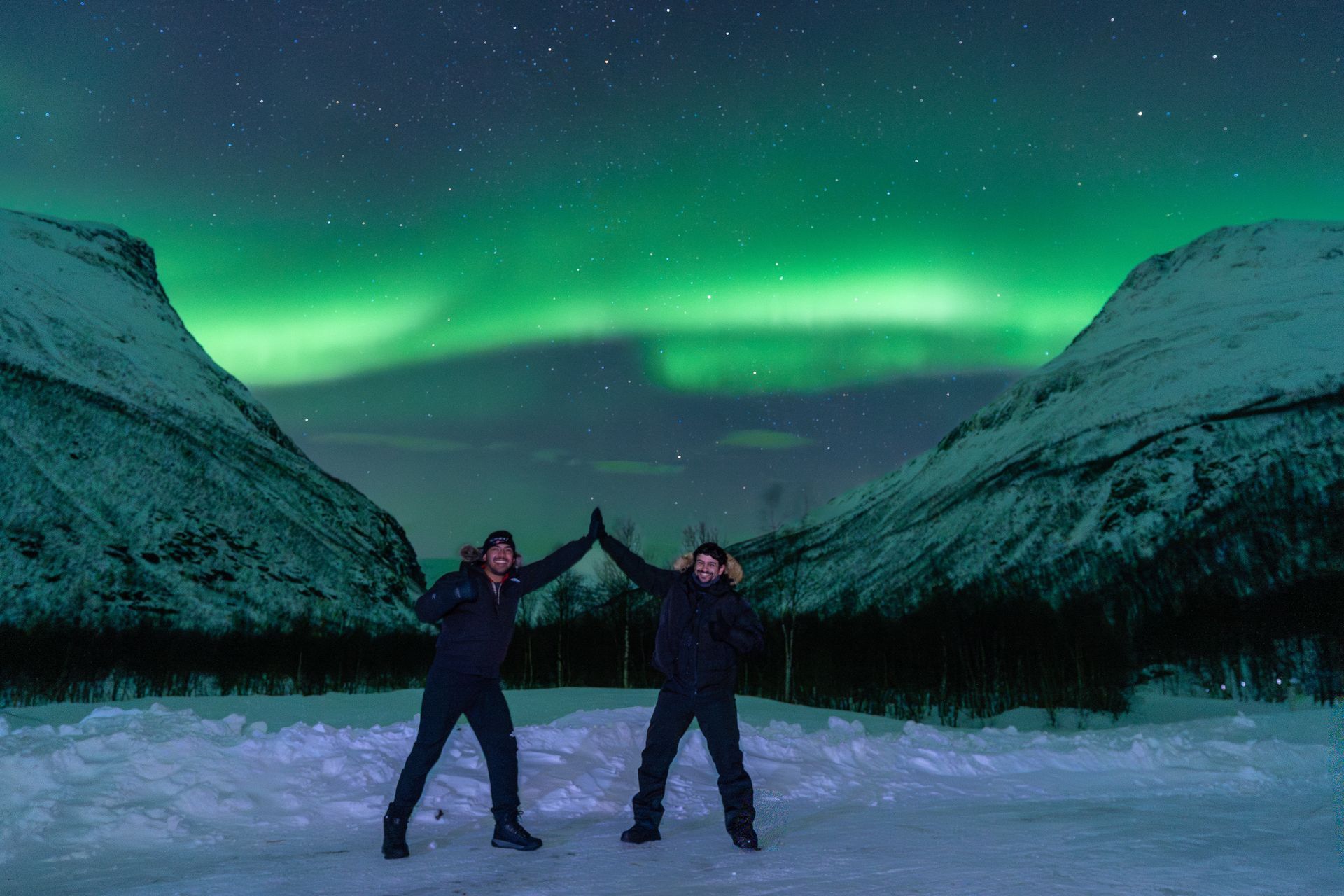
When is the best time to see the northern lights in Tromsø?
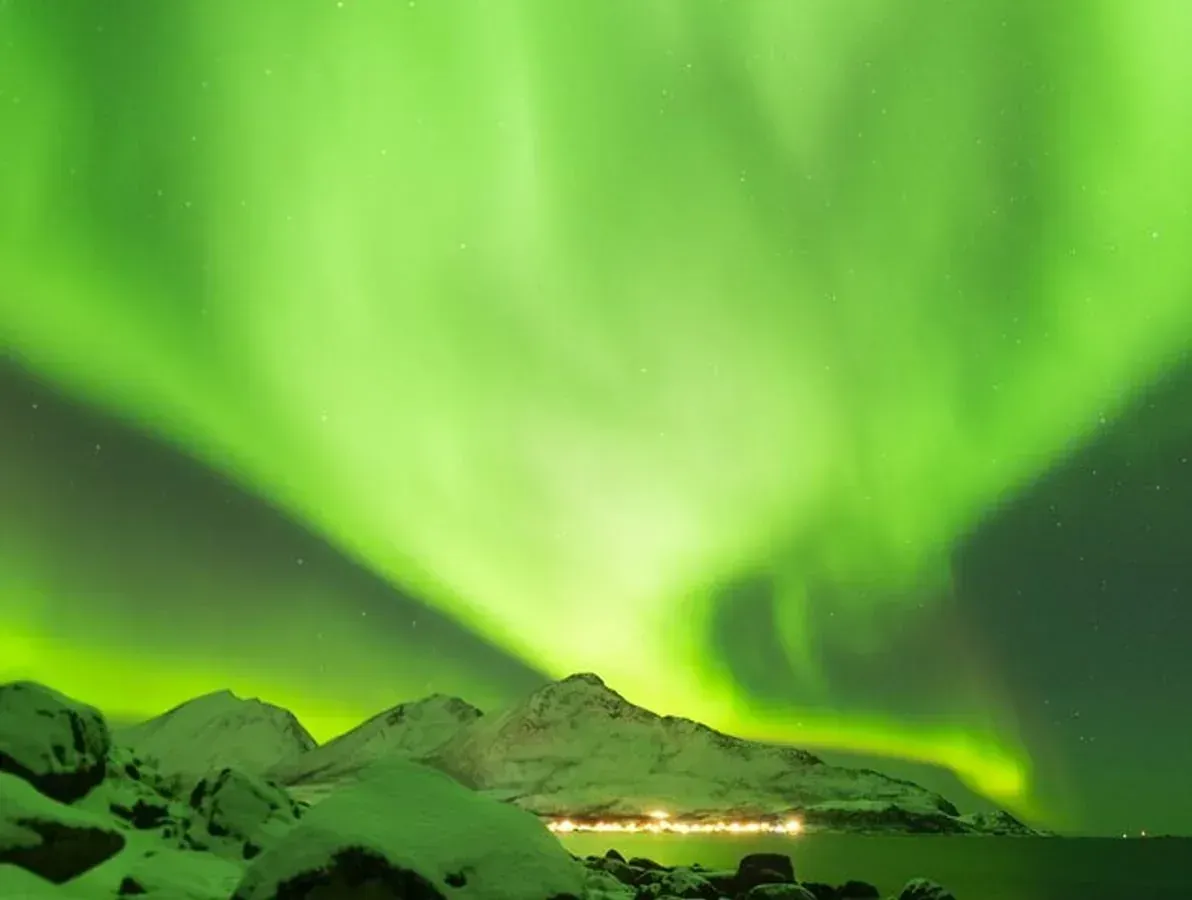
The aurora season runs from late September to early April, when the nights are dark enough for the
lights to show. The aurora is active all year — you simply can't see it under the midnight sun of summer.
Within the season, each period has its own character:
- September–October: milder temperatures, autumn colours and open water for reflections. Dark enough from around 9 PM.
- November–January: the polar night. Long hours of darkness and the classic deep-winter atmosphere, paired with snow activities and whale watching.
- February–March: many guides' favourite window — deep snow, longer days for daytime activities, and strong aurora, with fewer crowds than mid-winter.
Give yourself a minimum of three to four nights. Weather is the single biggest factor, and more
nights simply means more chances at a clear sky.

What time of night do the lights appear?
The most active window is usually between 6 PM and 1 AM, with activity often peaking around 10 PM–
midnight. The lights can appear as a faint grey-green arc and then suddenly intensify, so patience
matters — a quiet sky can come alive in minutes.
Clear skies beat strong aurora
People fixate on the KP index (a measure of geomagnetic activity), but in Tromsø a clear sky matters
more than a high KP. A modest aurora under a cloudless sky beats a strong one hidden behind cloud. This is why locals drive: if the coast is clouded over, we move inland or to a sheltered fjord where the
sky is open.
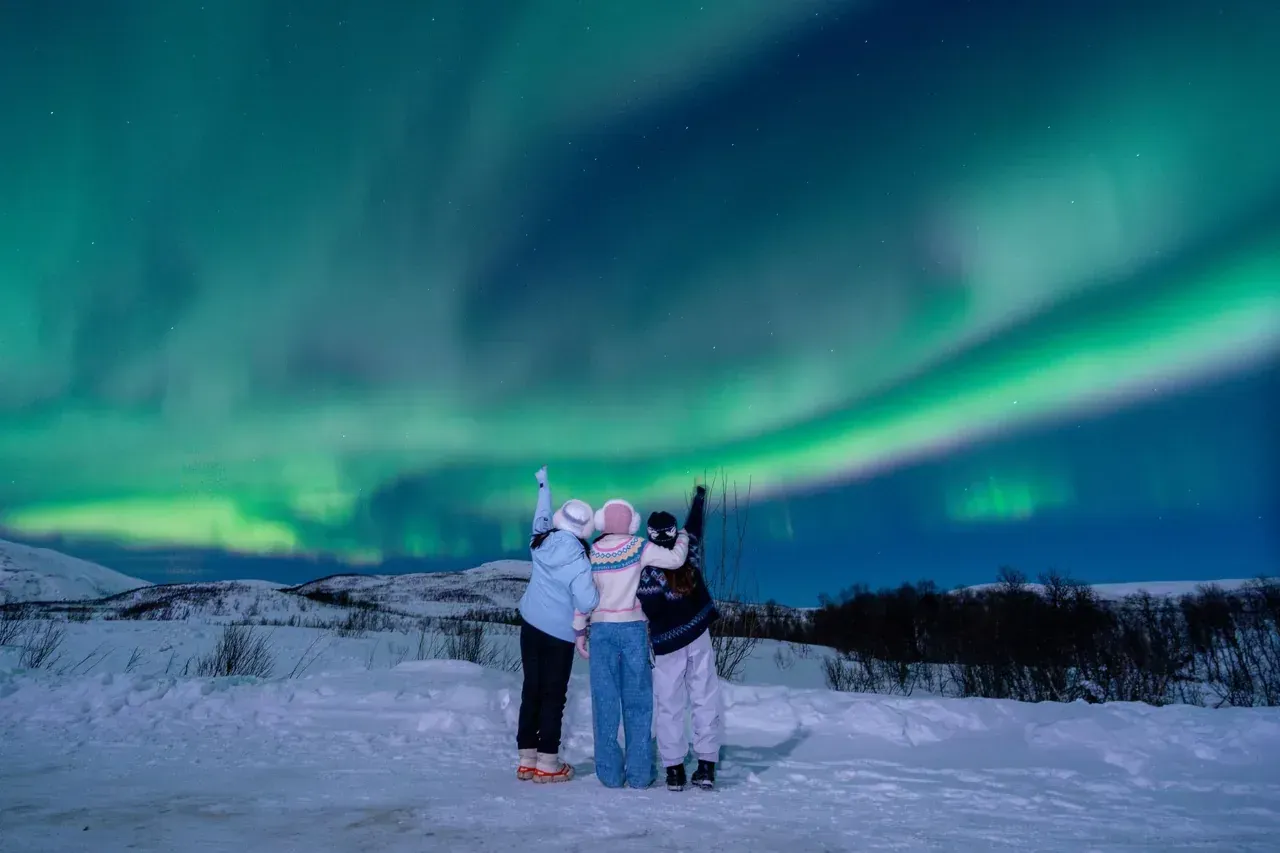
The best places to see the aurora around Tromsø
You can sometimes catch the lights from the city, but light pollution and clouds get in the way. These
spots around the region are reliably good:
Fjellheisen cable car — an easy elevated view right above the city for a first night.
Kvaløya island (Grøtfjord, Sommarøy): beaches and mountains that make dramatic foregrounds.
Kattfjordeidet mountain pass — frozen lakes and reflections about 30 minutes out.
Skibotn & inland valleys — among the driest, clearest areas in northern Norway when the coast is
cloudy.
Sheltered fjords east of the city — calm water and open northern sky.
On our tours we don't commit to one spot — we check the forecast and cloud radar each evening and drive to
wherever the sky is clearest that night.
How to photograph the northern lights
A phone can capture the aurora in night mode, but a camera you can control manually gives far better
results. Start here and adjust:
- Aperture: as wide as your lens goes — f/2.8 or lower.
- ISO: 1600–6400, depending on how dark it is and your camera.
- Shutter: 8–15 s for a faint, still aurora; 2–5 s when it's moving; under 2 s for a fast, bright display, so it doesn't blur into a smear.
- Focus: switch to manual, use live view on a bright star or distant light, and set focus to infinity.
- Gear: a sturdy tripod is non-negotiable; bring spare batteries (cold drains them fast) and shoot in RAW.
What to pack and wear
You'll be standing still outside in the cold for a while, so layer up: thermal base layers, a warm mid-
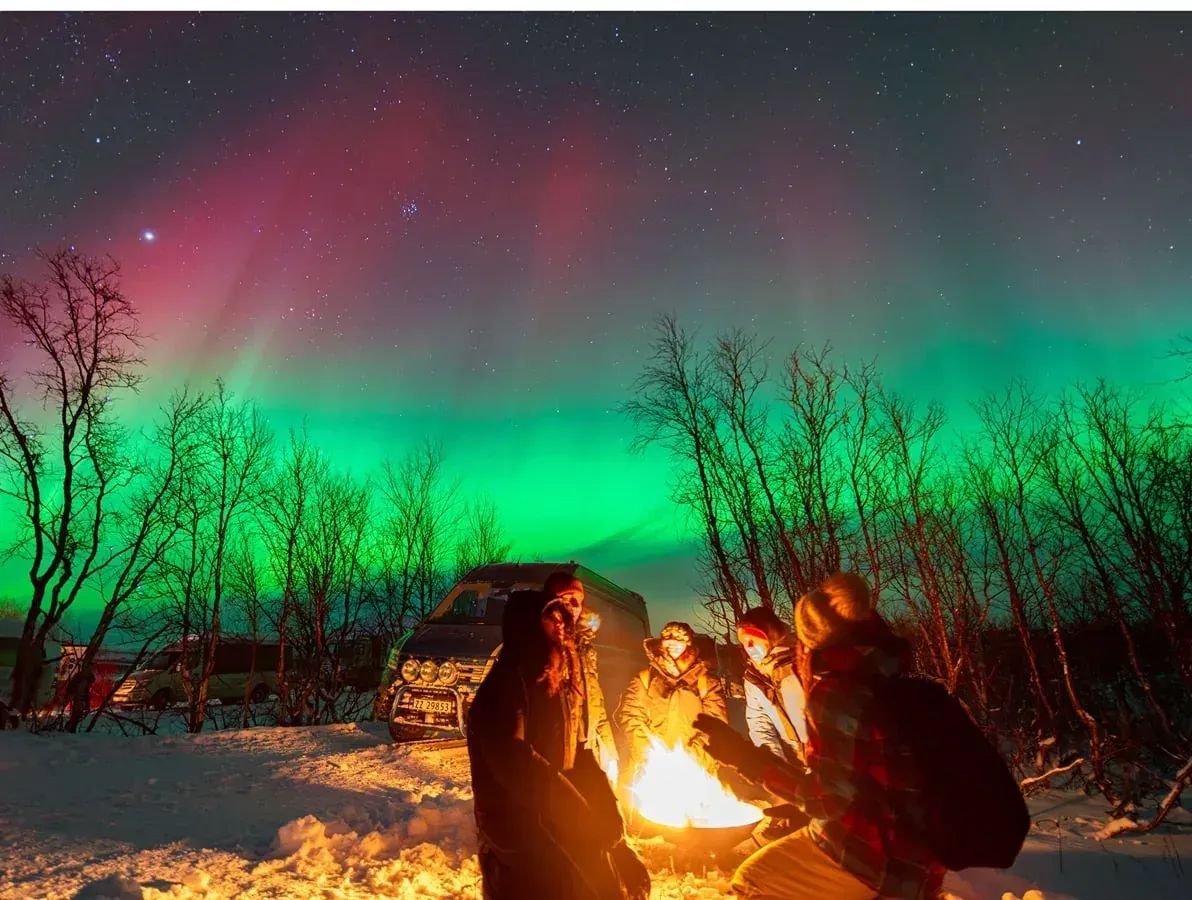
layer, a windproof outer shell, a hat, proper gloves and insulated winter boots. On our northern lights tours we
provide thermal suits, so you stay warm long enough to actually enjoy the show.